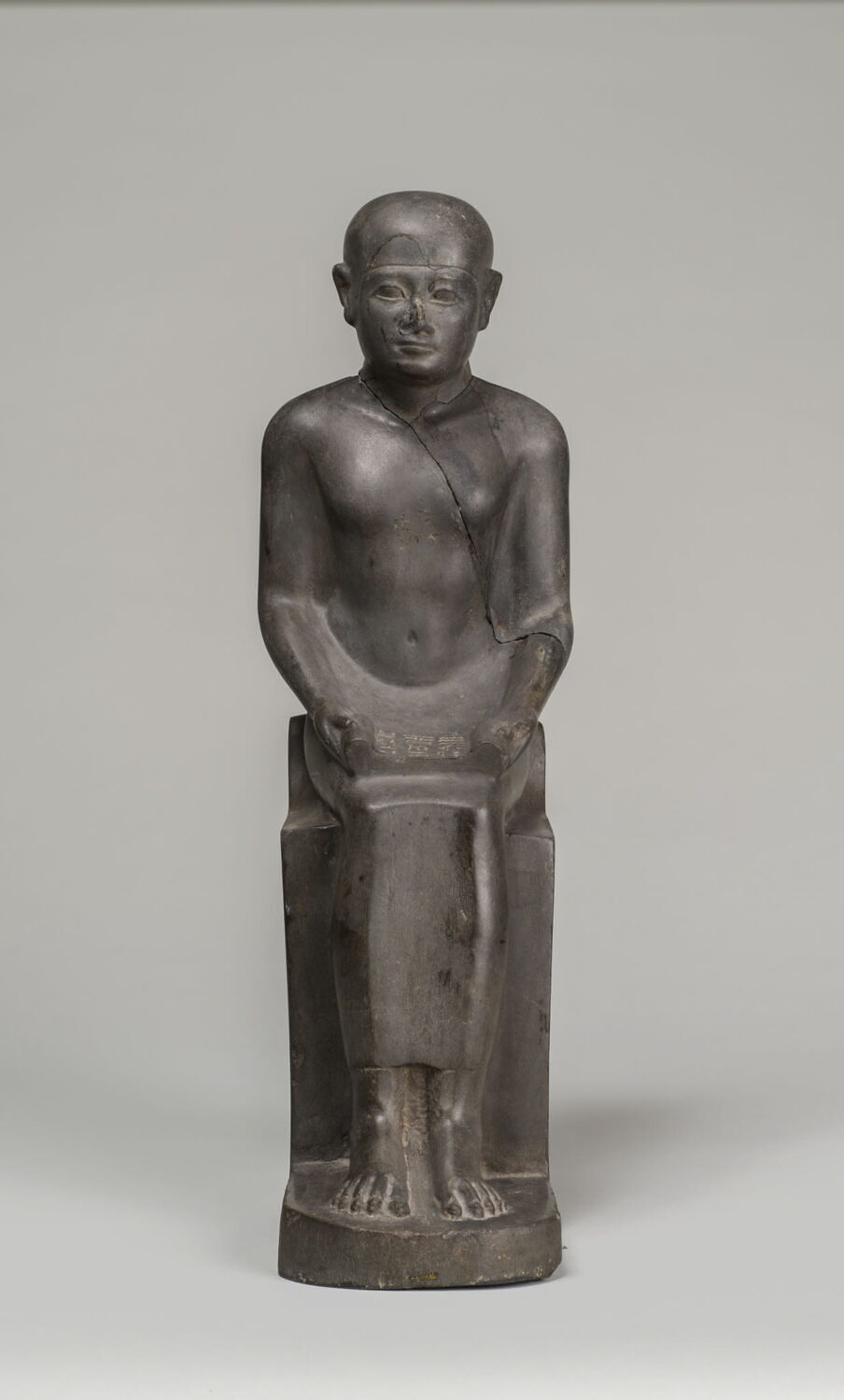
The earliest authenticated surviving representations of Imhotep date to the Late Period and Ptolemaic period, approximately two millennia after his lifetime. They reflect how later Egyptians revered and depicted him rather than providing a contemporary likeness.
This transparency is central to KHEPRA's scholarly standards under the KHEPRA Portrait Authenticity Standard (KPAS).
Imhotep
c. 332–30 BCE (Ptolemaic Period). Musée du Louvre.
Used under the KHEPRA Portrait Authenticity Standard (KPAS).
Imhotep
The architect, physician, and high priest who designed the first monumental stone building in history and was later deified as a god of medicine.
KHEPRA Documentary · 2026
Imhotep — The First Genius
The architect, the physician, the high priest — the man who designed the first monumental stone building in history and was later deified as a god of medicine. A KHEPRA documentary, narrated by Andrew.
Why Does Imhotep's Work Still Shape the World?
Imhotep designed and oversaw the construction of the Step Pyramid complex at Saqqara — the first monumental stone building in history.
Imhotep served as the highest-ranking non-royal official under Pharaoh Djoser, holding titles that included Chancellor of the King, High Priest of Ptah, and First after the King of Upper Egypt.
Imhotep was deified approximately two millennia after his death and was worshipped as a god of medicine and healing, with active cult centers at Memphis and Philae.
Imhotep is traditionally associated with the authorship of foundational medical knowledge, later preserved in the Edwin Smith Papyrus, though this attribution is debated.