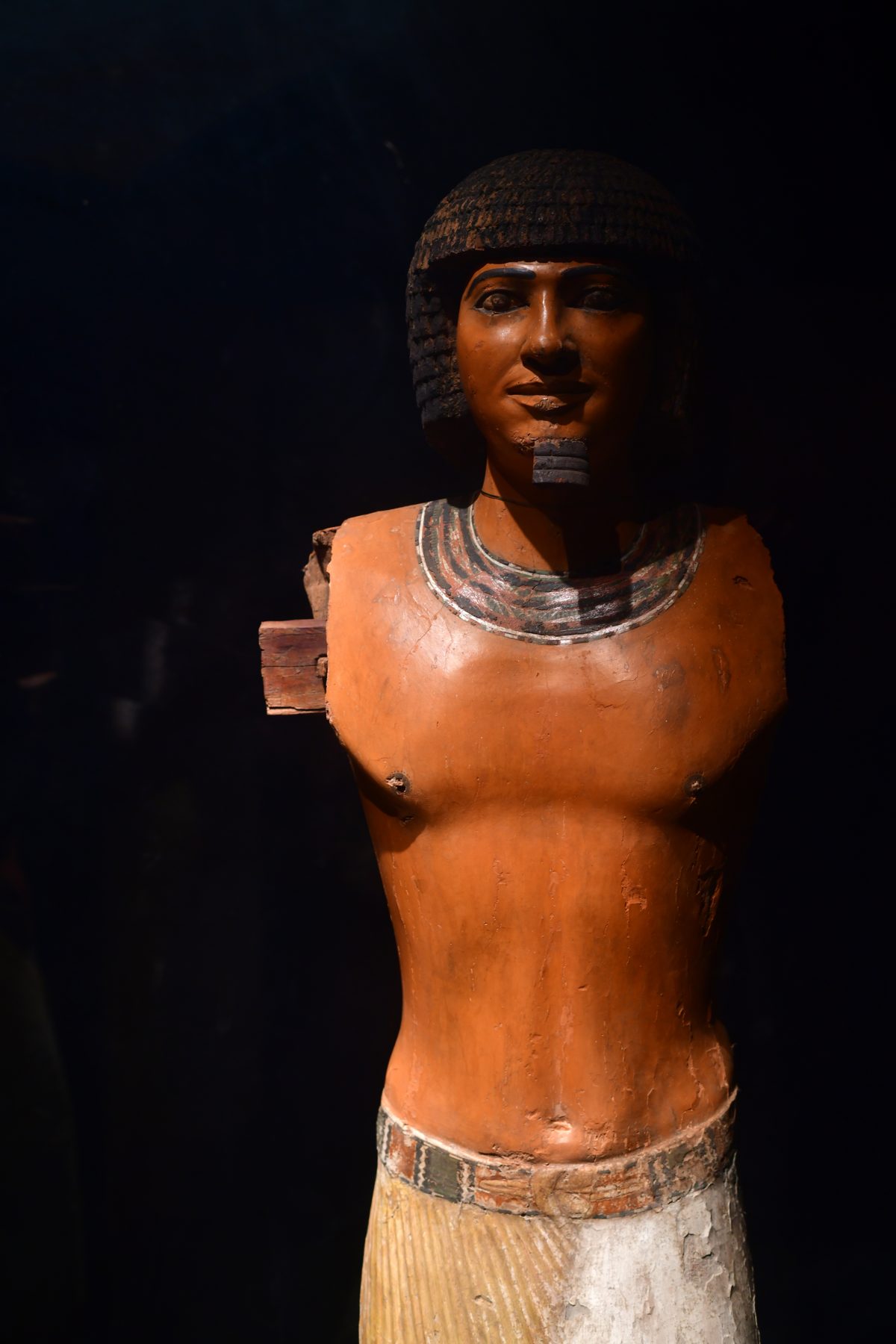
The portrait of Ptahhotep is rendered from an artifact created during his own lifetime — a rare Level I authenticated contemporary representation. The artifact itself dates to c. 2414–2375 BCE (5th Dynasty, Old Kingdom), so no temporal gap requires disclosure.
This transparency is central to KHEPRA's scholarly standards under the KHEPRA Portrait Authenticity Standard (KPAS).
Ptahhotep
c. 2414–2375 BCE (5th Dynasty, Old Kingdom). Egyptian Museum, Cairo.
Used under the KHEPRA Portrait Authenticity Standard (KPAS).
Ptahhotep
The vizier and philosopher whose Maxims of Ptahhotep survive as the oldest complete book in the world — a foundational text of ethical thought composed some 4,400 years ago.
Why Does Ptahhotep's Work Still Shape the World?
Ptahhotep served as vizier — the highest civil office in the state — under Pharaoh Djedkare Isesi of the 5th Dynasty.
Ptahhotep authored The Maxims of Ptahhotep (the Instruction of Ptahhotep), the oldest surviving complete book of wisdom literature (sebayt), composed in the late 5th Dynasty.
The Maxims survive in the Prisse Papyrus (Bibliothèque nationale de France, Egyptien 187), a Middle Kingdom copy of c. 1800 BCE long celebrated as "the oldest book in the world".
The ethical principles of the Maxims — humility, justice, restraint in speech, and respect for social order (Maat) — influenced later Egyptian wisdom literature and anticipate universal ethical precepts.