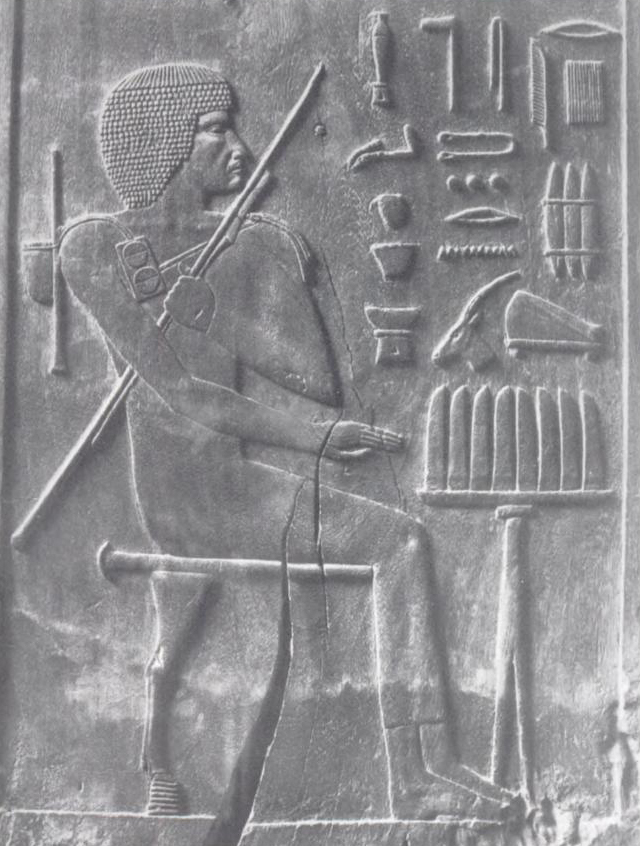
The portrait of Hesy-Ra is rendered from an artifact created during his own lifetime — a rare Level I authenticated contemporary representation. The artifact itself dates to c. 2650 BCE (3rd Dynasty), so no temporal gap requires disclosure.
This transparency is central to KHEPRA's scholarly standards under the KHEPRA Portrait Authenticity Standard (KPAS).
Hesy-Ra
c. 2650 BCE (3rd Dynasty). Egyptian Museum, Cairo.
Used under the KHEPRA Portrait Authenticity Standard (KPAS).
Hesy-Ra
The high official of Djoser’s court whose tomb panels preserve the earliest named physician and dentist in recorded history.
Why Does Hesy-Ra's Work Still Shape the World?
Hesy-Ra served as a high-ranking official at Saqqara during the reign of Pharaoh Djoser (3rd Dynasty), with titles attested by contemporary seal impressions found in his tomb.
Hesy-Ra bore the title wr-ibḥ-ḥw (Wer-ibeḥ-senjw), inscribed as the first title on wooden panel CG 1426 from his tomb at Saqqara.
Hesy-Ra’s title wr-ibḥ-ḥw is read by historians of ancient medicine (Forshaw, Ghalioungui, Nunn) as "Chief of Dentists and Physicians", making him the first named physician and dentist in recorded history — though the reading is disputed.
The six cedar wood panels from Hesy-Ra’s tomb (CG 1426–1431) are among the oldest preserved wooden reliefs from ancient Egypt and the earliest surviving depictions of a named medical official.